
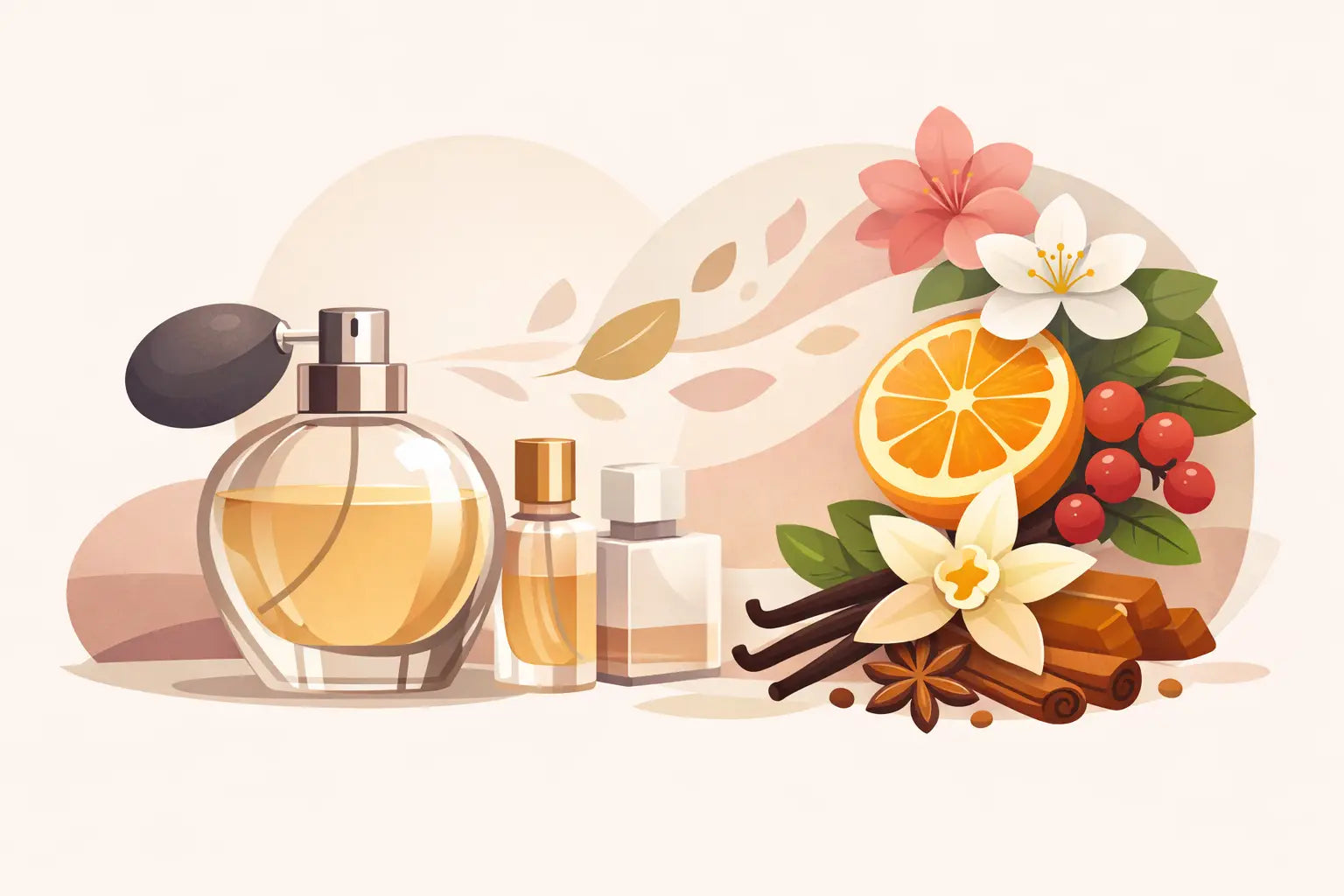
A perfume can smell bright and sparkling on the first spray, then turn soft, creamy, or unexpectedly warm an hour later. That shift is exactly why a fragrance notes guide matters. If you have ever loved a scent in the bottle but felt unsure once it settled on your skin, understanding notes can make fragrance shopping feel less like guesswork and more like personal style.
Fragrance is never just one smell. It unfolds in stages, and each stage shapes the mood a perfume leaves behind. Once you know how those layers work, it becomes much easier to choose a scent that feels polished for daytime, romantic for evenings, fresh after the gym, or gift-worthy for someone whose taste you know well but not perfectly.
What a fragrance notes guide actually means
In simple terms, fragrance notes are the individual scent impressions you notice as a perfume develops. They are usually grouped into top notes, middle notes, and base notes. These layers do not sit separately like stacked shelves. They blend together, but they appear with different intensity over time.
Top notes are your first impression. They are often bright, crisp, and attention-grabbing. Citrus, bergamot, lemon, green apple, and airy fruits often live here. These notes give a scent that clean, lively entrance people notice right away.
Middle notes, sometimes called heart notes, arrive once the opening begins to soften. This is often where the personality of the fragrance truly lives. Rose, jasmine, lavender, orange blossom, and spices are common choices. If a perfume feels romantic, elegant, or softly floral, the heart is usually doing most of that work.
Base notes are what remain closest to the skin. They create depth, warmth, and staying power. Vanilla, musk, sandalwood, amber, patchouli, and oud are classic examples. When someone says a fragrance feels sensual, rich, creamy, or long-lasting, they are usually responding to the base.
The fragrance notes guide to top, heart, and base notes
The easiest way to understand perfume is to think of it as a timeline. In the first few minutes, top notes lead. After around 15 to 30 minutes, the middle notes become more visible. Over the next few hours, the base notes settle in and create the lasting impression.
This matters because many shoppers buy based on the opening alone. A scent with juicy citrus at the start may dry down into something woody and smooth. Another perfume may begin powdery and gentle, then reveal a sweet vanilla base that feels much richer than expected. If you only judge the first spray, you can miss the version of the fragrance you will actually wear for most of the day.
It also explains why two perfumes that seem similar at first can end up feeling completely different. One may open with fresh pear and turn into a soft floral musk. Another may open with the same fruity brightness but settle into amber and patchouli, creating a mood that feels more dressed up and evening-ready.
How fragrance families help you shop smarter
Notes tell you what is inside a perfume, but fragrance families tell you the overall character. This is where shopping becomes easier, especially if you want a scent that matches your mood, wardrobe, or occasion.
Floral fragrances often feel graceful, feminine, and classic. They may feature rose, jasmine, peony, gardenia, or orange blossom. Some are airy and delicate, while others are creamy and full-bodied. If you like perfumes that feel polished and romantic, floral notes are often a beautiful starting point.
Fresh fragrances usually include citrus, green notes, aquatic touches, or clean musks. These scents feel effortless and modern. They are especially appealing if you want something crisp for daytime, work, warm weather, or everyday wear that never feels too heavy.
Woody fragrances lean into sandalwood, cedar, vetiver, oud, and dry earthier tones. They can feel elegant, grounded, and quietly luxurious. A woody fragrance may read masculine, feminine, or perfectly unisex depending on what surrounds it.
Oriental or amber fragrances tend to feel warm, sensual, and more dramatic. Vanilla, resin, amber, spice, incense, and rich woods are common here. These scents often shine in the evening, during cooler seasons, or anytime you want your fragrance to feel more memorable.
Gourmand fragrances are built around edible notes like vanilla, caramel, coffee, cocoa, almond, or sugared fruits. They can be playful, cozy, and addictive. The trade-off is that they may feel too sweet for some people, especially in high heat, so they depend a lot on your taste and timing.
Why the same perfume smells different on different people
A fragrance notes guide can teach structure, but skin chemistry still changes the experience. Body temperature, skin moisture, climate, and even how recently you applied lotion can affect the way a perfume develops.
On dry skin, some scents disappear faster and may lean sharper. On moisturized skin, they often feel smoother and last longer. Warmer skin can make sweet, spicy, and musky notes project more strongly. In hot weather, a rich amber perfume may feel fuller than it does in winter.
This is why a fragrance that smells soft and clean on a friend might feel sweeter or deeper on you. It is not that one person is wearing it wrong. Perfume is intimate. It reacts with the wearer, which is part of its charm.
How to choose notes that match your style
If you want your fragrance to feel like an extension of your wardrobe, start with the impression you want to leave rather than with a long list of ingredients. Think about whether you want to smell fresh, romantic, bold, sensual, relaxed, or refined.
For a clean and easy everyday scent, look for citrus, neroli, green tea, aquatic notes, light florals, or white musk. These tend to feel bright and wearable without asking for too much attention.
For something soft and feminine, rose, peony, jasmine, lily, and vanilla often create that pretty, graceful effect. For a more confident evening mood, amber, patchouli, oud, sandalwood, and spice can bring extra depth.
If you prefer modern unisex scents, try woods, musk, bergamot, cardamom, vetiver, or iris. These notes often feel stylish and balanced rather than overly sweet or overly sharp.
There is also room for contrast. Someone who dresses in minimal neutrals may love a dramatic floral or rich oud because fragrance becomes the statement. Someone with a glamorous style may prefer a clean skin scent for balance. Personal taste is rarely one-note.
Common note combinations and what they usually feel like
Certain combinations appear again and again because they create a familiar mood. Citrus with woods often feels crisp and sophisticated. Rose with musk feels elegant and soft. Vanilla with amber feels warm and inviting. Lavender with spice can feel smooth, clean, and quietly seductive.
Still, combinations are not guarantees. A vanilla perfume can feel airy and sheer, or deep and dessert-like. A floral fragrance can feel dewy and youthful or rich and formal. The concentration, the quality of the blend, and the other supporting notes all matter.
That is where browsing with a little fragrance knowledge becomes helpful. If you already know you enjoy bergamot, white florals, and musk, you can quickly spot perfumes likely to suit you. If patchouli usually pulls too earthy on your skin, that is useful too. Knowing what to avoid is just as valuable as knowing what to seek out.
Mistakes people make when using a fragrance notes guide
One common mistake is assuming a single favorite note guarantees love at first spray. If you like vanilla, that does not mean every vanilla fragrance will suit you. Some vanillas are smoky, some are sugary, and some are wrapped in woods or florals that change the entire mood.
Another mistake is ignoring the dry-down. The base is what stays with you, lingers on clothing, and creates memory. A quick store test may tell you whether the opening is attractive, but it will not tell you whether the scent becomes too powdery, too sweet, or just right after an hour.
People also sometimes chase trends instead of mood. A note like oud or cherry may be fashionable, but that does not automatically make it your signature. The best fragrance feels aligned with your presence, not borrowed from someone else’s aesthetic.
Using this fragrance notes guide when buying online
Shopping online for perfume becomes much easier once you read the note pyramid with intention. Start with the top notes to understand the opening, but pay closest attention to the middle and base if you care about wearability and lasting impression.
Then consider the fragrance family and the occasion. A sparkling citrus floral may be perfect for daily wear or gifting someone who likes fresh beauty staples. A richer amber vanilla may feel better for date nights, events, or someone who prefers a more glamorous signature.
Reviews can help, but use them carefully. One shopper’s “too sweet” may be another shopper’s “beautifully warm.” It helps more to compare descriptions with what you already know you enjoy. Retailers like SG SHOPE make this easier when fragrances are presented through mood, notes, and style rather than just brand names.
Fragrance becomes far more personal when you stop asking what smells expensive and start asking what feels like you. The right notes do more than smell good. They add polish to a morning, softness to an evening, and a little extra confidence every time you leave the house.