
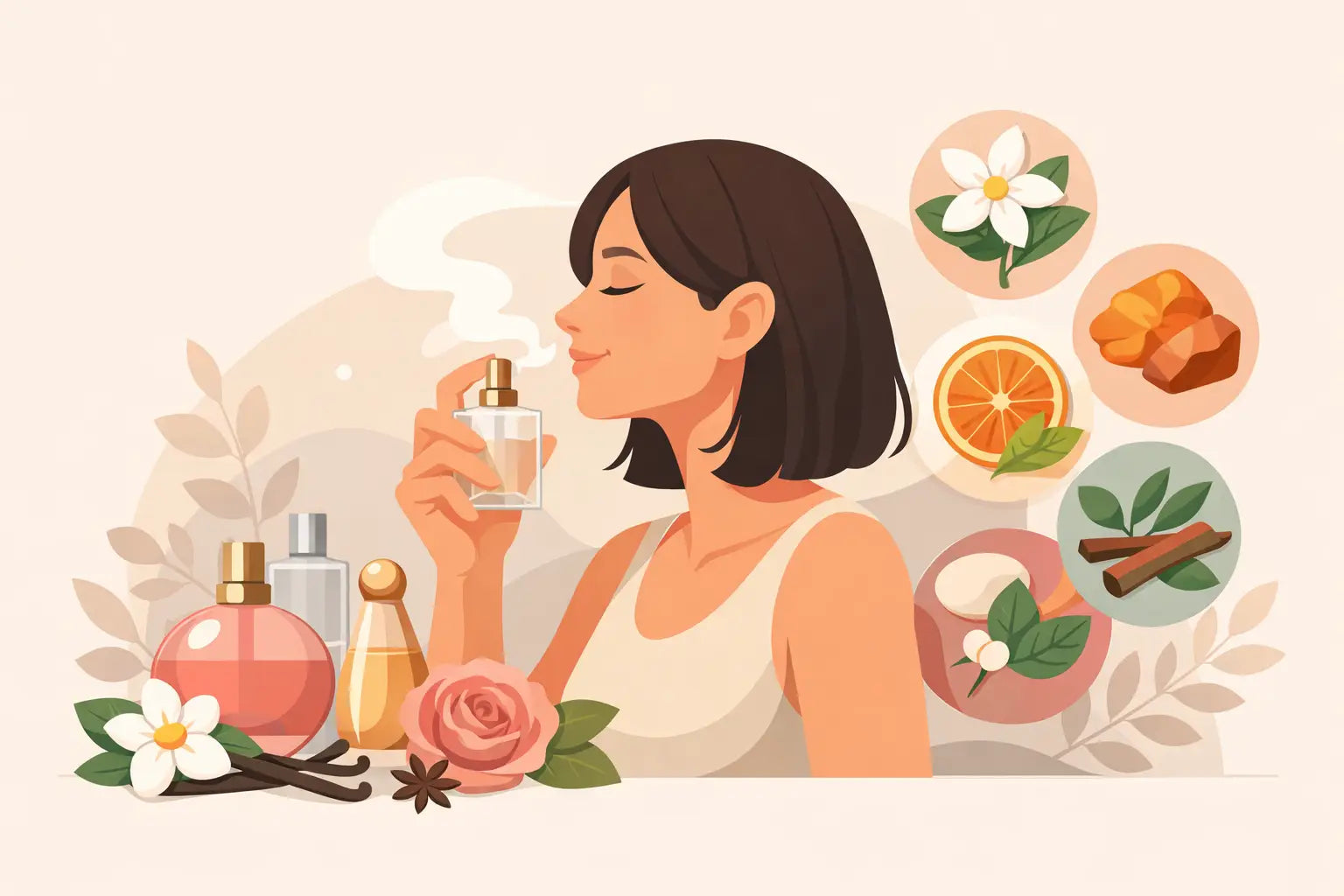
A perfume can smell dreamy on a blotter, polished in the bottle, and completely different once it meets your skin. That is why learning how to choose perfume notes matters more than chasing whatever is popular. The right notes do not just smell good - they feel like you, fit the moment, and leave the kind of impression you actually want to make.
How to choose perfume notes with confidence
The easiest way to get overwhelmed by fragrance is to shop by name alone. Beautiful bottles, celebrity buzz, and words like fresh or sensual only tell part of the story. Notes are what shape the personality of a fragrance, and once you understand them, perfume shopping becomes far more intuitive.
Think of notes as the layers of a scent story. Top notes are the first impression. They are often bright, airy, and quick to appear, with ingredients like bergamot, citrus, apple, or pink pepper. Heart notes arrive next and usually define the mood of the fragrance. Rose, jasmine, lavender, orange blossom, and spice often live here. Base notes stay the longest and create depth. Vanilla, musk, amber, sandalwood, patchouli, and oud are common examples.
If you tend to fall in love with perfumes in the first five seconds and then feel disappointed later, you are probably buying for the top notes only. A fragrance should still feel beautiful after 30 minutes, because that is when the heart and base begin to show their true character.
Start with the feeling you want
Before you focus on ingredients, focus on mood. Fragrance is personal, but it is also emotional. Some people want a scent that feels clean and effortless for everyday wear. Others want something warm, romantic, bold, or dressed up. If you start with the mood, the notes become easier to narrow down.
If you want something fresh and polished, look at citrus, neroli, green tea, marine notes, and light florals. These usually feel easy, bright, and daytime-friendly. If you want softness and femininity, rose, peony, freesia, and musk often create that delicate elegance. If your style leans richer and more evening-ready, vanilla, amber, tonka bean, sandalwood, and oud can feel luxurious and memorable.
For men, the same idea applies. Crisp bergamot, vetiver, lavender, and aquatic notes often read clean and modern. Woods, leather, spices, tobacco, and amber tend to feel deeper, more confident, and more sensual. Unisex fragrance lovers often enjoy the tension between freshness and warmth - think citrus over woods, or floral notes balanced by musk and amber.
This is where taste really matters. A perfume can be beautifully made and still not feel right for your style. If your wardrobe is minimal, breezy, and understated, a heavy syrupy gourmand may feel out of sync. If you love glamour and statement pieces, a barely-there citrus might feel too quiet.
Learn the main note families
You do not need a perfumer's vocabulary to shop well, but it helps to recognize the broad families and what they usually suggest.
Floral notes are classic for a reason. Rose can feel velvety, romantic, or fresh depending on what surrounds it. Jasmine can be creamy and sensual or airy and luminous. Orange blossom often feels radiant and polished. Florals work beautifully if you want elegance, softness, or a refined signature scent.
Citrus notes such as lemon, bergamot, mandarin, and grapefruit bring brightness and lift. They are often associated with freshness, energy, and clean sophistication. The trade-off is that citrus tends to fade faster unless it is supported by woods, musk, or amber.
Woody notes like sandalwood, cedar, vetiver, and cashmere wood add structure and sophistication. They can feel smooth, grounded, and quietly expensive. If you want a scent that feels chic rather than sugary, woody compositions are worth exploring.
Amber, vanilla, and gourmand notes bring warmth. These notes often feel cozy, creamy, sweet, and inviting. They can be incredibly addictive, especially in cooler weather or evening settings, but on some people they may wear a little rich for daytime or hot climates.
Fresh and aquatic notes smell airy, watery, green, or just-showered clean. They are easy to wear and often crowd-pleasing, though sometimes they do not have the same depth or longevity as warmer fragrances.
Spicy, leathery, and smoky notes create drama. Cardamom, pepper, saffron, leather, incense, and tobacco can feel magnetic and fashion-forward. These scents tend to be more distinctive, which is great if you want presence, but they may not be the safest blind buy.
Your skin changes the perfume
One of the biggest fragrance truths is also the most frustrating: perfume does not smell identical on everyone. Skin chemistry, body temperature, dryness, even the climate around you can shift how notes unfold.
Warm skin often pushes a fragrance outward and can make sweet or spicy notes feel more intense. Drier skin may cause perfume to fade faster, especially lighter citrus or fresh scents. That is why a musky floral may smell creamy and elegant on one person, then powdery or sharp on someone else.
When testing, spray on skin and give it time. The first few minutes are only the opening. Wait at least 20 to 30 minutes before deciding, and if possible wear it for a few hours. A scent that starts sparkling and turns flat, or starts strong and settles beautifully, tells you much more than the opening alone.
Match notes to your routine, not just your taste
A gorgeous fragrance still needs to fit your life. Some notes shine in an office, some are better for date night, and some feel perfect for weekend brunch, vacation, or special events.
For daily wear, many people prefer notes that feel clean, smooth, and versatile. Citrus, soft florals, musk, tea, and light woods usually work well because they feel polished without taking over the room. For evening, richer notes like amber, vanilla, oud, spice, or deep florals can feel more alluring and dressed up.
Season matters too. In summer, fresh citrus, marine notes, neroli, and sheer florals tend to feel more comfortable. In fall and winter, warmer notes like sandalwood, patchouli, tonka, and vanilla often feel richer and more satisfying. That said, there are no strict rules. If you love vanilla in July, wear vanilla in July. The better question is whether the fragrance feels balanced on you in that setting.
How to choose perfume notes when shopping online
Online fragrance shopping is convenient, but it asks you to read between the lines. If you are not smelling in person, focus on the note pyramid, the fragrance family, and the mood words used to describe it.
If a perfume lists bergamot, orange blossom, and musk, you can usually expect something clean, bright, and softly elegant. If it features vanilla, amber, and patchouli, it will likely wear warmer, deeper, and a little more sensual. A blend of rose, lychee, and peony may feel feminine and luminous, while cedar, vetiver, and black pepper may lean crisp, woody, and masculine.
This is also where knowing your preferences saves you from random purchases. If you have consistently enjoyed fragrances with jasmine and sandalwood, that pattern matters. If syrupy caramel scents always feel too sweet, trust that instinct. Shopping gets much easier once you notice what your nose keeps returning to.
For shoppers browsing a fragrance destination like SG SHOPE, that awareness turns a long product page into a more personal search. You are not just comparing brands. You are looking for the note profile that fits your identity, mood, and everyday style.
Build a small scent wardrobe
A single signature fragrance is lovely, but many people are happier with two or three note profiles for different moments. You might want a fresh daytime scent, a soft romantic scent, and a richer evening option. That does not mean overbuying. It means choosing with intention.
This approach also takes pressure off the idea that one perfume must do everything. Maybe you adore airy citrus in the morning but want amber and vanilla at night. Maybe floral musk feels perfect for work, while oud or spice feels right for events. Fragrance is part of how you present yourself, and different moments ask for different energy.
A simple way to choose better
If you want a shortcut, ask yourself three things before buying. Do I like these notes on paper? Do I like how they settle on my skin? Do they match how I want to feel when I wear them? If the answer is yes to all three, you are usually very close to the right choice.
The best perfume notes are not the trendiest or the most expensive. They are the ones that feel natural on you, flattering in your routine, and memorable in the way you want to be remembered. Let your fragrance say something beautiful, but let it still sound like your own voice.
The next time a scent catches your attention, slow down and listen to its layers. The right notes rarely shout. They linger, soften, and become part of your presence in a way that feels effortless.