

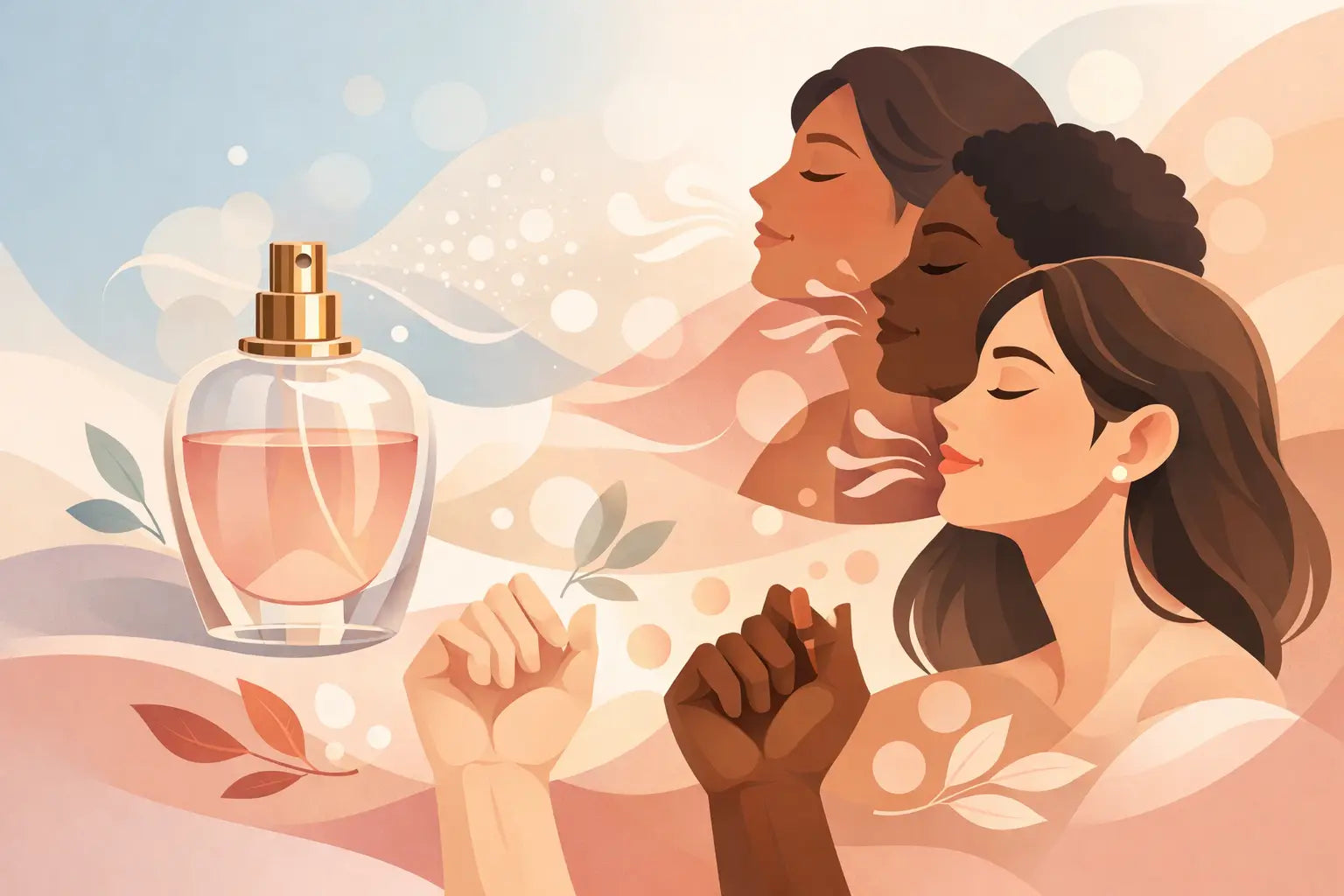
A fragrance can feel like a perfect match on a blotter, then turn softer, sweeter, warmer, or unexpectedly sharp once it meets your wrist. If you have ever wondered why perfumes smell different skin to skin, the answer is not that the perfume has changed. It is that fragrance is designed to react with the most personal accessory you own: your skin.
That is also why a scent your best friend wears beautifully may feel entirely different on you. The notes are the same, but the way they unfold becomes part of your individual style. A bright floral may take on a creamy glow, a clean citrus may become sparkling and airy, and a rich woody fragrance may reveal a deeper, more sensual side.
Why Perfumes Smell Different From Skin to Skin
Perfume is a blend of aromatic materials that evaporate at different speeds. The top notes make the first impression, the heart notes create the fragrance's character, and base notes stay close to the skin long after the opening has faded. Your skin's natural oils, moisture level, temperature, and even its surface pH influence how quickly those materials evaporate and which facets feel most noticeable.
This is not a dramatic chemical transformation into a new perfume. Instead, your skin changes the balance of what reaches your nose over time. Think of it as wearing the same silk dress in different light: the fabric remains the same, but its color and finish can appear beautifully different.
Your natural skin oils shape the dry-down
Skin produces sebum, a natural oil that can hold fragrance molecules and slow their evaporation. On oilier skin, a perfume may last longer and feel richer because the base notes have more time to develop. Vanilla, amber, musk, sandalwood, and resinous accords often become especially inviting in this setting.
On drier skin, fragrance can seem to disappear more quickly or remain closer to the original opening. This does not mean your skin is “bad” for perfume. It simply means a scent may need a little support from an unscented moisturizer, or you may prefer a formula with a more substantial base. A fresh eau de toilette can be lovely on dry skin, but a perfume oil or eau de parfum may offer more presence through the day.
Skin temperature changes the pace
Warm skin helps fragrance project. After a walk outside, a busy afternoon, or a warm shower, a scent can bloom more quickly and seem stronger than it did in a cool room. This is why pulse points such as the wrists, neck, and inner elbows are classic places to apply perfume.
Heat can be flattering to floral, fruity, and spicy scents, drawing out their energy and radiance. Yet it can also make an already intense fragrance feel heavier. A deep oud, leather, or amber composition may be irresistible on a crisp evening but a little overwhelming in summer heat. Season, climate, and body temperature all deserve a place in your fragrance decision.
Hydration affects how long a scent stays beautiful
Moisturized skin usually gives perfume a smoother surface to cling to. When skin is dehydrated, fragrance may evaporate faster, especially the sparkling top notes that make citrus, aquatic, and green scents feel fresh.
For a more lasting experience, apply an unscented lotion and let it absorb before spraying. If you are wearing a matching body cream, use a light hand so the layers complement rather than compete with your perfume. The goal is not to make a fragrance louder. It is to give its notes the chance to develop with elegance.
pH matters, but not in the way social media suggests
Your skin's pH is mildly acidic and can vary slightly from person to person. It contributes to the overall environment in which perfume sits, but it is rarely the single reason a scent smells completely different on someone else. Natural oils, warmth, hydration, and fragrance concentration usually have a more noticeable effect.
It is best to be skeptical of claims that a perfume will smell “wrong” because of your pH. Fragrance is personal, not a pass-or-fail test. The more useful question is whether its dry-down makes you feel polished, comfortable, and unmistakably yourself.
The Notes You Notice May Not Be the Notes Someone Else Notices
A fragrance has layers, and different skin types can spotlight different layers. Someone with warm, moisturized skin may notice a soft vanilla or cashmere musk early on. Someone with cooler or drier skin may hold on to the bergamot, pear, or peppery opening for longer.
This is particularly noticeable with complex fragrances. A perfume that begins with bright citrus may settle into white flowers, then leave a smooth woody trail. On one person, the flowers may take center stage. On another, the woods may feel more dominant. Neither experience is more accurate. Both are part of the fragrance's design.
Fragrance concentration changes the experience too. An eau de toilette often feels lighter and more immediate, with a noticeable opening and softer trail. An eau de parfum generally contains a higher concentration of aromatic oils, allowing heart and base notes to linger longer. Higher concentration does not automatically mean better, though. It depends on whether you want a breezy daytime freshness, a confident evening presence, or something that moves gracefully between both.
How to Test a Perfume on Your Own Skin
A quick spray on a paper strip is useful for narrowing down what catches your attention, but it should never be the final decision. The strip reveals the perfume's opening and its general character. Your skin tells you whether it belongs in your collection.
Start by spraying once or twice on a clean wrist or inner elbow. Avoid rubbing your wrists together. Friction can warm the skin and disturb the way the top notes settle, making the opening feel less true to the fragrance's intended progression.
Give it time. Smell it after the first few minutes, then again after 30 minutes and after a few hours. The first moment may be all juicy fruit, crisp citrus, or bright petals. The real personality often arrives later, when warm musk, creamy woods, soft powder, amber, or skin-like notes begin to appear.
When testing more than one fragrance, use separate areas of skin and keep the number small. Two or three scents are usually enough for one visit or one afternoon. Your sense of smell can become tired quickly, especially around sweet gourmands, dense florals, and bold masculine blends. Fresh air and a little time are more useful than trying to smell everything at once.
Everyday Habits That Can Change Your Fragrance
Your perfume may not smell identical every day, even when you use the same bottle. Shower products, body lotion, hair care, laundry fragrance, and deodorant can all create a scented backdrop. A strongly fragranced body wash may make a delicate perfume feel less distinct, while unscented skincare lets the perfume take the lead.
Diet, medication, hormonal shifts, stress, and perspiration can also affect your natural scent and how you perceive fragrance. These changes are normal, and their effect varies widely. If a favorite perfume suddenly seems unfamiliar, try it on well-moisturized skin at a different time of day before deciding it is no longer for you.
Storage matters as well. Keep bottles away from direct sunlight, heat, and humidity. A bathroom counter may look glamorous, but frequent steam and temperature changes are not ideal for preserving a fragrance's original character. A cool, dry drawer or cabinet helps protect those carefully balanced notes.
Choosing a Signature Scent With Confidence
The secret to finding a signature fragrance is not chasing the scent that smells best on everyone else. It is choosing one that makes your own skin feel more expressive. Fresh citrus and aquatic notes can feel clean and energized for daytime. Rose, jasmine, peony, and soft musk can bring a romantic, polished finish. Woods, spice, amber, and vanilla often create a memorable after-dark warmth.
At SG SHOPE, fragrance is more than a finishing touch. It is a small, luxurious ritual that can shift the mood of an ordinary day, refine a gift, or make getting ready feel more intentional. Let a perfume settle before you judge it, and notice how it feels by the time it becomes close to the skin.
The most beautiful fragrance is not always the one that makes the loudest entrance. It is the one that, hours later, still feels like it was meant to be yours.