

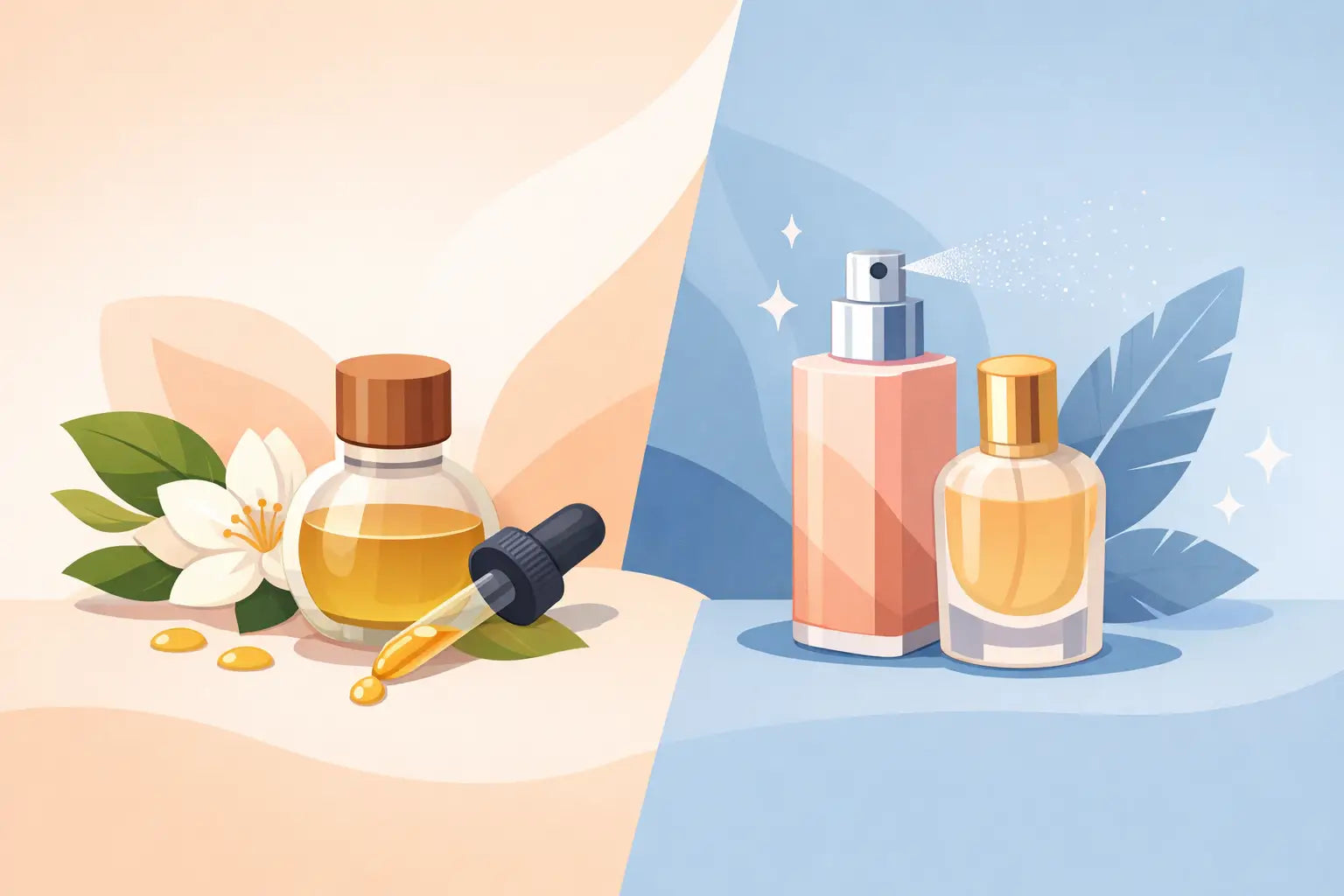
A fragrance can be the finishing touch that makes an ordinary outfit feel intentional: a soft floral at brunch, clean citrus before a meeting, or warm amber for an evening that calls for a little mystery. When comparing perfume oil vs spray, the question is not simply which one lasts longer. It is about how you want your scent to move with you, how close you want it to sit on the skin, and what feels most natural in your daily ritual.
Both formats can feel luxurious. Both can hold beautiful notes, from bright bergamot and romantic rose to smooth vanilla, sandalwood, and smoky musk. Their difference lies in the way the fragrance is carried, applied, and experienced throughout the day.
Perfume Oil vs Spray: The Essential Difference
Perfume sprays are usually made by blending fragrance materials with alcohol and a small amount of water. The alcohol helps the scent evaporate from the skin, creating the lift and diffusion that many people associate with a traditional perfume or cologne. That first mist can feel vivid and expressive, especially when a fragrance opens with sparkling fruit, fresh herbs, aquatic notes, or crisp citrus.
Perfume oils use an oil-based carrier instead. They are typically applied with a rollerball, dropper, or dabber directly onto pulse points. Because oil evaporates more slowly than alcohol, the scent tends to stay closer to the skin and develop with a softer, more intimate character.
Think of spray fragrance as an entrance and perfume oil as a beautiful secret. One may be noticed when you walk into the room; the other is often discovered when someone leans closer. Neither experience is better by default. Your ideal choice depends on the setting, your skin, and the kind of scent presence that feels like you.
Projection: Do You Want a Scent Trail or a Skin Scent?
Projection describes how far a fragrance reaches from the wearer. Spray perfumes generally offer more projection, particularly in the first hour or two after application. A few well-placed spritzes can create a polished scent aura around you, which is why sprays often suit social events, date nights, celebrations, and moments when you want your fragrance to be part of your overall presence.
Perfume oil usually has a quieter projection. It does not mean the fragrance is weak. In fact, an oil can smell rich and remarkably long-lasting, but it is less likely to fill your personal space. This makes it an elegant choice for offices, flights, close quarters, or anyone who prefers their fragrance to feel personal rather than performative.
There is also a practical middle ground. You may love a spray for its radiant opening and keep a coordinating oil in your bag for a discreet touch-up later. Layering two formats can add dimension, but use a light hand. The goal is a lasting impression, not a crowded cloud of competing notes.
Longevity Depends on More Than the Format
It is tempting to assume that perfume oil always lasts longer than spray, but fragrance performance is more personal than that. Oils often cling to the skin for many hours because they evaporate slowly. Warm notes such as vanilla, tonka bean, amber, oud, patchouli, and creamy woods can feel especially plush in oil form.
A quality spray can also last beautifully, particularly when it has a higher fragrance concentration or a base built around resins, musk, woods, and gourmand notes. An eau de parfum often has more staying power than an eau de toilette, though the formula itself matters more than the label alone. Fresh citrus, green tea, and airy floral compositions may naturally wear closer and fade sooner, whether they come in a spray bottle or an oil.
Your skin plays a role, too. Fragrance can disappear quickly on very dry skin. Applying an unscented moisturizer before perfume oil or spray can help the notes hold on longer and unfold more smoothly. For spray fragrance, a light mist on clothing can extend wear, but test a hidden area first. Oils should be kept off delicate fabrics, since they may leave a mark.
How Each Format Feels on Skin
Spray perfume feels light, quick, and familiar. It is easy to apply before leaving home: mist pulse points, let the fragrance settle, and go. Many people enjoy that classic moment of fragrance in the air, especially with fresh, romantic, or glamorous scents that deserve a little space to bloom.
Oil feels more deliberate. Rolling it onto the wrists, inner elbows, or the base of the neck turns application into a small act of self-care. The texture can be comforting, particularly in colder months when skin craves moisture. Some oils leave a subtle sheen, while others absorb quickly depending on the carrier used.
If you have sensitive skin, the answer is not automatically oil. Alcohol-based sprays can feel drying or irritating for some people, but certain fragrance materials and essential oils can also cause sensitivity. Patch test a new fragrance on a small area of skin, and avoid applying any scent to irritated or freshly shaved areas. A beautiful fragrance should feel as good as it smells.
Choosing by Occasion, Season, and Mood
A spray is often the effortless choice when you want versatility. It works well for a morning routine, a polished workday, dinner plans, or gifting someone a recognizable fragrance experience. If you enjoy catching a soft trace of your scent on a scarf or in your hair as you move, a spray may feel more expressive.
Perfume oil comes into its own when you want warmth and closeness. It is lovely for slow weekends, intimate evenings, travel days, and environments where a soft fragrance is more considerate. Oils also pair beautifully with cozy scent families. Imagine a velvety vanilla, a skin-like musk, a golden amber, or a rose softened with sandalwood resting close to the body.
Season can shape the decision. In warm weather, a spray's airy diffusion can make citrus, neroli, marine, and light floral notes feel refreshing. In cooler weather, oils can give richer notes a smooth, enveloping quality. Still, personal preference matters more than any rule. A bright spray can be gorgeous in winter, and a soft floral oil can be perfect on a summer evening.
Application Makes a Noticeable Difference
With a spray, hold the bottle several inches from the skin and apply two to four spritzes depending on the fragrance strength and your preferred presence. The wrists, neck, inner elbows, and chest are classic choices because body warmth helps release the notes. Do not rub your wrists together. Friction can disturb the opening and make the fragrance develop differently than intended.
With perfume oil, apply a small amount first. Roll or dab it on pulse points, then allow it to warm naturally against the skin. More is not always better, especially with deep notes like oud, leather, spice, or dense white florals. If you want extra longevity, use a small amount behind the ears or at the base of the neck, where the scent can rise softly throughout the day.
For a more customized fragrance wardrobe, choose your format based on the effect you want. Keep a bright, confidence-boosting spray for days when you want to feel seen. Reach for a soft oil when you want your scent to feel like a signature that belongs only to you.
Which One Is Right for You?
Choose perfume spray if you love a noticeable opening, a more radiant scent trail, and the ease of a quick mist before heading out. It is a natural fit for people who enjoy fragrance as part of their style statement and want notes to feel lively in the air around them.
Choose perfume oil if you prefer a close-to-the-skin fragrance, a slower and smoother evolution, or a portable format for quiet touch-ups. It can be especially appealing if you want warmth, softness, and a more intimate expression of your favorite notes.
You do not have to commit to only one. A fragrance collection can be as flexible as your wardrobe: fresh spray for daytime, a sensual oil for evening, and a gift-ready bottle for the person whose signature scent deserves a little celebration. Let your mood lead, trust your skin, and choose the format that makes every wear feel beautifully your own.